Vaccination During Pregnancy: Best Guide by Dr Suneet Kaur
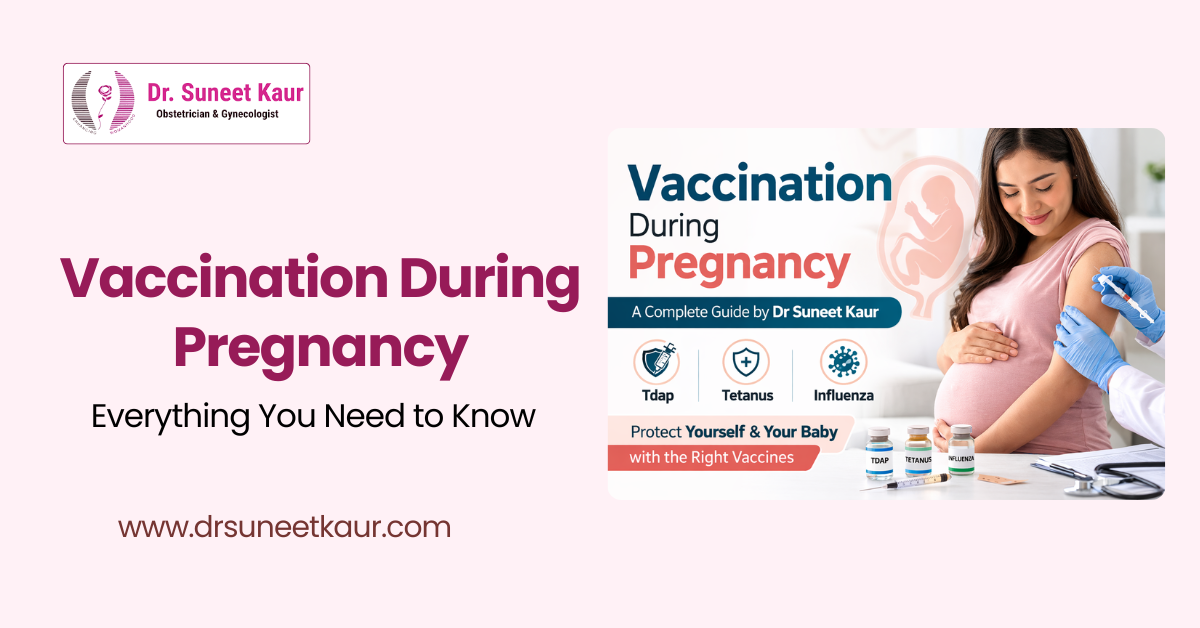

Pregnancy is a special and important time in a woman’s life. During these months, maintaining good health becomes essential not only for the mother but also for the developing baby. One of the most effective ways to protect both mother and baby from serious infections is Vaccination During Pregnancy.
Vaccines help prevent diseases that can cause complications during pregnancy. When a pregnant woman gets vaccinated, her body produces antibodies that can fight harmful infections. These antibodies are also passed to the baby, giving the newborn protection during the first few months of life.
In this complete guide, Dr. Suneet Kaur explains the importance of Vaccination During Pregnancy, recommended vaccines, safety information, and answers to common questions.
Vaccination During Pregnancy refers to giving specific vaccines to pregnant women to protect them and their babies from infectious diseases.
During pregnancy, a woman’s immune system changes, making her more vulnerable to infections. Vaccines strengthen the immune system and help prevent diseases that could harm the pregnancy.
An important benefit of vaccination is that antibodies produced by the mother are transferred to the baby through the placenta. This helps protect the newborn after birth.
Vaccination is an essential part of prenatal care because it provides protection against serious infections.
Pregnant women are more likely to develop complications from infections. Vaccines help prevent diseases that may become severe during pregnancy.
When the mother receives vaccines, protective antibodies pass to the baby. This provides early immunity during the first months of life.
Some infections during pregnancy may cause:
Premature delivery
Low birth weight
Severe illness in newborns
Miscarriage
Vaccination significantly reduces these risks.
Doctors usually recommend certain vaccines that are considered safe and effective during pregnancy.
The Tdap vaccine protects against three diseases:
Tetanus
Diphtheria
Pertussis (Whooping cough)
Whooping cough can be very dangerous for newborn babies. Taking the Tdap vaccine during pregnancy helps pass protective antibodies to the baby.
The Tdap vaccine is generally recommended between 27 and 36 weeks of pregnancy.
The Tetanus vaccine is commonly recommended during pregnancy to protect the mother and baby from tetanus infection.
Tetanus is a serious bacterial infection that affects the nervous system and can be life-threatening.
In many countries, pregnant women receive two doses of the tetanus vaccine during pregnancy to ensure proper protection.
Protects mother from tetanus infection
Prevents neonatal tetanus in newborn babies
Provides long-term immunity
The Influenza vaccine protects pregnant women from seasonal flu infections.
Pregnant women are at a higher risk of severe flu complications due to changes in the immune and respiratory systems.
Reduces risk of severe flu illness
Protects the mother during pregnancy
Provides antibodies to the baby
The influenza vaccine is generally safe and can be taken during any trimester of pregnancy.
Some vaccines contain live viruses and are usually avoided during pregnancy.
Examples include:
MMR (Measles, Mumps, Rubella) vaccine
Varicella (Chickenpox) vaccine
HPV vaccine
If these vaccines are needed, doctors usually recommend taking them before pregnancy or after delivery.
View this post on Instagram
Yes, recommended vaccines for Vaccination During Pregnancy are considered safe. They have been tested extensively and are recommended by healthcare professionals.
These vaccines do not harm the baby. Instead, they provide important protection against infections that could otherwise cause complications during pregnancy.
However, pregnant women should always consult a qualified gynecologist before receiving any vaccine.
Pregnant women should follow certain precautions before receiving vaccines.
Always seek advice from a qualified gynecologist before vaccination.
Inform your doctor about allergies, past vaccine reactions, or medical conditions.
Vaccines should be taken at the appropriate stage of pregnancy for maximum protection.
Routine pregnancy checkups help ensure both mother and baby remain healthy.
Expert medical guidance is essential throughout pregnancy. A qualified gynecologist ensures proper monitoring, prenatal care, and timely Vaccination During Pregnancy.
If you are looking for expert pregnancy consultation, you can visit the Best Gynecologist in Rohini for professional maternity care, pregnancy checkups, and personalized medical guidance.
Regular consultations with an experienced doctor help ensure a safe pregnancy journey
Yes, Vaccination During Pregnancy is recommended to protect both the mother and the baby from serious infections.
The commonly recommended vaccines are:
Tdap vaccine
Tetanus vaccine
Influenza vaccine
The Tdap vaccine is usually given between 27 and 36 weeks of pregnancy.
Yes, the influenza vaccine is considered safe and can be taken during any trimester of pregnancy.
No. Recommended vaccines help protect the baby by transferring antibodies from the mother.
Vaccination During Pregnancy is an important part of prenatal healthcare that protects both the mother and the baby from serious infections. Vaccines such as Tdap, Tetanus, and Influenza help prevent diseases that could otherwise lead to complications during pregnancy.
Expecting mothers should always follow their doctor’s recommendations and maintain regular prenatal checkups. Proper vaccination ensures a safer pregnancy and provides early immunity to newborn babies.
For expert pregnancy care and guidance regarding Vaccination During Pregnancy, consulting the Best Gynecologist in Rohini can help ensure that both mother and baby receive the best possible care.