Signs of a High-Risk Pregnancy Every Woman Should Know
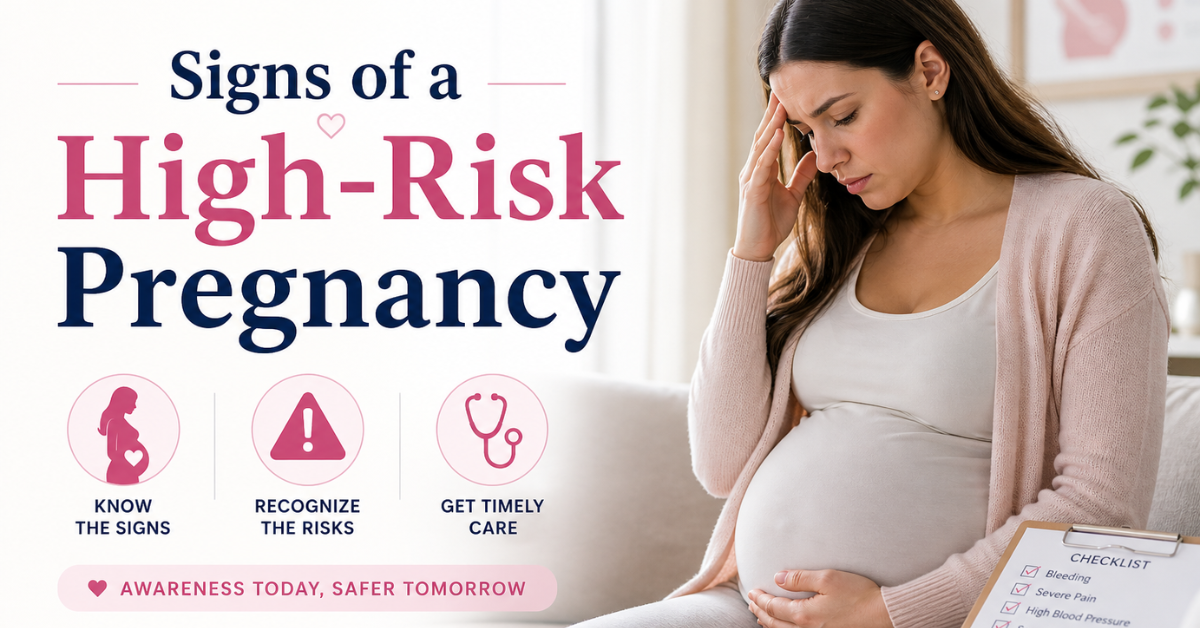


Pregnancy is a beautiful journey, but for some women, it may come with certain complications that require extra care and attention. Understanding the Signs of a High-Risk Pregnancy is essential for ensuring the safety of both mother and baby. Early identification can help in timely medical intervention and reduce potential risks.
In this guide, we’ll break down everything you need to know in a simple, easy-to-understand way so that you can stay informed and prepared.
A high-risk pregnancy is one where the mother, baby, or both have an increased chance of health problems during pregnancy, labor, or delivery. This doesn’t mean complications will definitely happen—but it does mean closer monitoring is required.
Before understanding the Signs of a High-Risk Pregnancy, it’s important to know who may fall into this category:
If you fall into any of these categories, regular check-ups are extremely important.

Let’s explore the most common warning signs that should never be ignored:
Mild cramps can be normal, but intense or persistent abdominal pain may indicate serious conditions like ectopic pregnancy or placental issues.
👉 When to worry: If the pain is sharp, constant, or accompanied by bleeding.
Light spotting can occur in early pregnancy, but heavy bleeding is one of the major Signs of a High-Risk Pregnancy.
👉 It could indicate:
Frequent headaches combined with blurred vision or sensitivity to light could be symptoms of preeclampsia—a dangerous condition.
👉 Other signs include:
After 28 weeks, your baby’s movement pattern becomes regular. A sudden decrease or no movement is a warning sign.
👉 Always consult your doctor immediately if movements reduce significantly.
A persistent fever (above 101°F) during pregnancy can harm the baby and may indicate infection.
👉 This is especially risky in early pregnancy.
Morning sickness is common, but extreme vomiting (Hyperemesis Gravidarum) can lead to dehydration and weight loss.
👉 Warning signs:
Some swelling is normal, but sudden or severe swelling could signal preeclampsia.
Shortness of breath is common, but severe breathing issues or chest pain could indicate heart or lung complications.
Experiencing contractions before 37 weeks may indicate preterm labor.
👉 Symptoms include:
If you notice fluid leaking from the vagina, it may mean your water has broken early.
👉 Immediate medical attention is required.
If you notice any of the above Signs of a High-Risk Pregnancy, don’t delay seeking medical help. Early diagnosis can prevent complications and ensure a safe pregnancy.
For expert care and guidance, consulting the Best Gynecologist in Rohini can help you manage high-risk pregnancy with proper monitoring and treatment.
Understanding underlying conditions can help you stay alert:
Regular prenatal checkups can detect these conditions early.
Even if your pregnancy is high-risk, you can still have a healthy baby with proper care.
Frequent check-ups help track your health and baby’s development.
Eat a balanced diet rich in:
Drink enough water to prevent dehydration.
Mental health is equally important. Practice relaxation techniques.
Take prescribed medications and follow your doctor’s instructions strictly.
Here are some simple yet effective tips:
Yes, with proper care and monitoring, risks can be managed effectively.
Not always. Your doctor will recommend it based on your condition.
It depends on your health condition. Many women with high-risk pregnancies still have normal deliveries.
Recognizing the Signs of a High-Risk Pregnancy can make a life-saving difference. Being aware of warning signs like severe pain, bleeding, reduced baby movement, and high blood pressure helps in early intervention.
Pregnancy requires care, attention, and awareness. If you experience any unusual symptoms, don’t ignore them. Seek medical advice immediately and ensure regular checkups for a safe and healthy journey.
For personalized care and expert consultation, consider reaching out to the Best Gynecologist in Rohini to ensure you and your baby are in safe hands.
 Optimized by Seraphinite Accelerator

